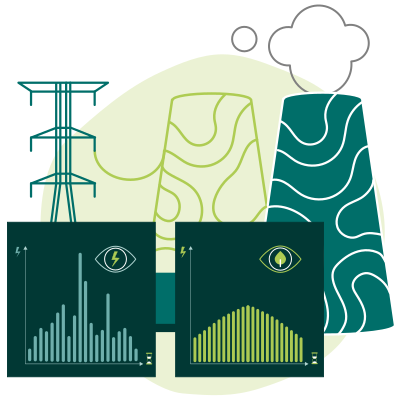
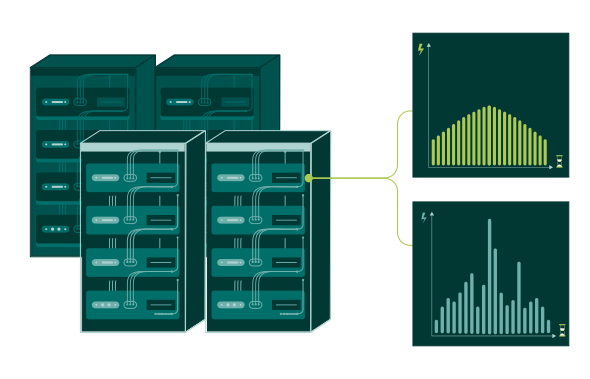
An AI training run can cause power swings over 200MW in 40ms, like a quarter-million people joining the grid. WDPC standardizes communication between workloads and infrastructure, preventing these swings from destabilizing power systems and wasting renewable energy.
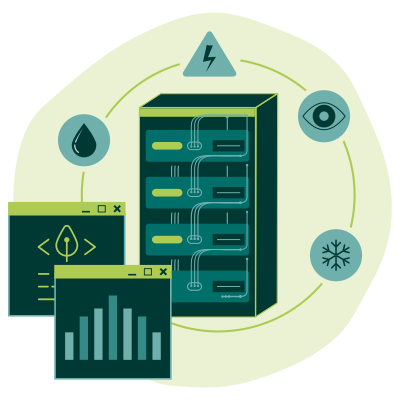
The Workload Dynamic Power and Cooling (WDPC) framework represents a fundamental shift in how computational workloads and energy infrastructure communicate.
By establishing standardized temporal data formats and interfaces, WDPC creates a common language that enables compute workloads, data centers, and power grids to communicate effectively.
This common language allows them to coordinate in real-time without relying on prescriptive control systems. Think of WDPC as the universal translator for the energy ecosystem.
It enables every component—from individual processors to municipal power grids—to share their needs, capabilities, and constraints in a format everyone understands, supporting a stable and responsive grid.
This approach transforms isolated "energy islands" into an intelligent, connected network capable of handling demanding computational tasks while optimizing renewable energy use and overall grid stability.
The rapid growth of artificial intelligence (AI) and machine learning (ML) is creating unprecedented challenges for our energy infrastructure and unique opportunities for innovation.
The computational demands of modern architecture are becoming increasingly volatile. A
single large language model training session can cause power fluctuations that would have
been unimaginable just years ago. WDPC addresses this critical challenge by providing the
data foundation that enables facilities to participate in energy markets, demand response
programs, and renewable energy optimization.
Going beyond managing today's workloads, it helps build the infrastructure for a future where
computation and sustainability are inseparable. By standardizing how workloads communicate
with infrastructure, WDPC transforms isolated data centers into participants in a coordinated,
efficient energy ecosystem.
Grid Stability enables load forecasting and demand response that prevents costly disruptions
Carbon Optimization schedules workloads to run when renewable energy is abundant
Cost Reduction participates in energy markets and dynamic pricing programs
Heat Recovery coordinates waste heat delivery to municipal heating systems
Infrastructure Efficiency improves utilization through predictive workload signaling
WDPC converts environmental responsibility from aspiration
into an achievable reality. By making carbon intensity visible and actionable at millisecond
scales, organizations can automatically shift computational workloads to times when clean energy
is abundant.
The framework enables data centers to become active participants in the renewable energy transition,
coordinating with grid operators to maximize the use of solar and wind power while maintaining
the performance that modern applications demand. Reimagine how computation and energy work
together.
Modern AI workloads can create massive, rapid power surges comparable to hundreds of thousands of households switching on ACs simultaneously, risking grid destabilization and increased carbon emissions. WDPC prevents this by enabling predictive coordination: workloads share their plans, grids adjust in advance, and the system adapts in real time, ensuring stability, efficient renewable use, and sustainable performance
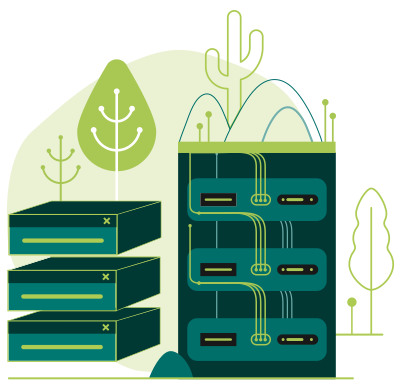
Connecting traditionally disparate components in the datacenter via a data bus to develop novel approaches to power management.
Schedule compute-heavy tasks when renewable energy is abundant, with workloads signaling power needs in advance.
Help grid operators forecast demand and participate in energy management programs through standardized interfaces.
Redirect data center heat to district heating networks, turning excess thermal energy into a community resource.
Schedule workloads based on grid carbon intensity, optimizing tasks to use cleaner energy.

WDPC gives you the data foundation to build truly carbon-aware applications. Through standardized APIs, your services can receive real-time signals about grid carbon intensity, infrastructure capacity, and renewable energy availability.
While you design the logic, WDPC ensures you have consistent, reliable data to make intelligent scheduling decisions. This is your chance to architect systems that balance performance with sustainability, and have the metrics to prove it.
WDPC opens doors to energy market participation and demand response programs that were previously inaccessible. With standardized data exchange, your facilities gain the visibility needed to optimize energy costs and demonstrate sustainability progress with real metrics.
As AI workloads grow, WDPC provides the coordination framework to scale intelligently, aligning computational needs with grid capacity and renewable availability. It's the foundation for turning energy management from reactive to strategic.
WDPC brings clarity to sustainability measurement by standardizing how energy and carbon data flows through your infrastructure. You'll have consistent temporal data to track actual carbon intensity, measure waste heat recovery, and correlate workload decisions with emissions.
For your reporting system, WDPC ensures the underlying data is reliable, comparable, and auditable. Finally, a path to sustainability claims backed by real operational data.
Project Leadership
My Truong | CTO, Zutacore | Project Lead | Hardware Standards Working Group
Actively recruiting contributorsWe're building this standard with input from data center operators, infrastructure providers, and sustainability experts worldwide. Your expertise can help shape how the industry coordinates energy for decades to come.
Current focus: The specification is actively developing, and experts, operators, and sustainability practitioners are invited to refine and validate it.
Proposal
Pre-Draft
Draft
Consistency Review
WG Final Approval
SC Ratification
Publication
WDPC is a path toward intelligent energy coordination. We need diverse perspectives to ensure this standard serves the entire ecosystem.
WDPC is being developed by the Green Software Foundation (GSF), a nonprofit consortium under the Linux Foundation dedicated to building a future where software has zero harmful environmental impact. With steering members including Accenture, Avanade, BCG X, Cisco, Google, Microsoft, NTT Data, Siemens, and UBS, GSF brings together industry leaders to create open standards that make sustainable computing achievable at scale.
Beyond WDPC, the foundation maintains the ISO-certified Software Carbon Intensity (SCI) specification, develops open-source tools like the Impact Framework and Carbon Aware SDK, and has trained over 130,000 practitioners in green software principles worldwide. GSF's standards and tools are already in production at organizations globally, proving that performance and sustainability can work together.
Whether you're managing data centers, developing AI applications, or driving sustainability initiatives, your experience and insights can help create a standard that transforms how the world thinks about computational energy. Together, we can build an infrastructure where performance and sustainability become equal partners.